
Virdhabon: History, Significance, Rituals, Date & How Is Celebrated
Introduction
India has diverse festivals, religious practices, and rituals that are an integral part of daily life. The devotion, family traditions, and religious beliefs have deep significance to the people. Not only is it a religious practice, but it also gives them a chance to have quality time with family, follow traditions, and pass on cultural heritage.
In this blog post, we will discuss the meaning of Virdhabon, its religious significance, history, rituals, and how it is celebrated, with fasting and important things to know.
Note: Religious practices vary according to region, family traditions, and Panchang. Thus, the article is only informative, and the readers are requested to follow the religious practices that have been existing in their community for generations.

What Is Virdhabon?
Virdhabon is a religious observance whose significance and rituals may vary depending on the regional tradition. Before publishing this article, it is essential to know the exact local name and spelling as similar-sounding words may have entirely different meanings for Hindu observances.
It is a significant point for a religious blog to remain accurate and culturally sensitive. A festival’s date, deity, fasting rules, puja procedure, and story should ideally be backed by religious texts, Panchang, or scholars of the tradition.
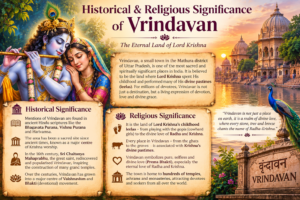
Historical & Religious Significance
India’s religious traditions are diverse and often combine elements of culture and scriptures. Many Hindu vrats and festivals promote values like devotion, austerity, gratitude, charity, family welfare, and introspection.
The significance attributed to a particular day could have both religious and cultural dimensions. Observing a vrat can be seen as an opportunity to pray, offer puja, fast, visit a temple, offer donations, or engage in community service.
However, it is essential to distinguish between claims of supernatural efficacy and unsubstantiated assertions. This approach ensures the blog’s authenticity and adheres to guidelines for credible information dissemination.
How Is Virdhabon Celebrated?
Depending on the region and community, the following are some common rituals:
1. Cleaning the House
Before starting with any religious activity, it is important to clean the house. This step is connected to a positive mindset and making the place pure.
2. Taking a Ritual Bath
One of the most essential steps for Hindus is to take a ritual bath before puja. It is customary to wear new or clean clothes after the bath.
3. Preparing the Puja Place
A clean place is necessary to keep the idols/images of the gods. The devotees may light incense sticks, diyas, and candles. They may also keep sweets, fruits, flowers, or water as offerings.
4. Prayer, Mantra, and Stotram
This step is connected to the deity or scripture one worships. It may involve chanting mantras or stotrams, or reading the vrat katha. It is important to verify the accuracy of the content from a reliable source connected to the tradition.
5. Fasting
Depending on the tradition, many Hindus observe a fast on this day. The fasting rules could range from light (fruits and milk) to a complete fast.
Those with health conditions, children, elderly people, pregnant women, and nursing mothers should avoid fasting without consulting a healthcare professional.
6. Offering Food & Charity
Hindus believe in daan or charity. Hence, it is considered an auspicious activity to offer food, clothes, money, or other items to the needy.
Spiritual Significance Of Virdhabon
Apart from the do’s and taboos, religious practices offer many benefits to the people who follow them. They help people come together, make them aware of social issues, and make them strong in mind and spirit.
Festivals like Virdhabon are not only for the deity but also for the people. It gives the whole family a chance to bond and for the children to learn about the cultural and traditional practices from elders.
Virdhabon Puja Samagri
The particular puja materials should be inquired according to the tradition of the specific Virdhabon. Typically, the items listed below may be deemed as common Hindu puja offerings:
Flowers
Incense sticks
Diya
Cotton wicks
Oil or ghee
Fruits
Sweets
Rice or akshat
Water
Sandalwood paste
Kumkum
Turmeric
Betel leaves and nuts
A clean cloth
It should also be noted that not all items listed above are mandatory, as devotion to the deity and following tradition is more important than buying an extended list of ritual items.
Why Is Virdhabon Important?
The significance of Virdhabon is multi-faceted and may be interpreted from different perspectives.
Religious: The day is favorable for prayers and rituals for the followers of Hinduism.
Cultural: Observing the day is crucial for preserving cultural heritage, as diverse stories, rituals, dietary habits, and even family traditions may be handed down through generations.
Social: Religious holidays typically feature the gathering of extended families and communities and promote philanthropy.
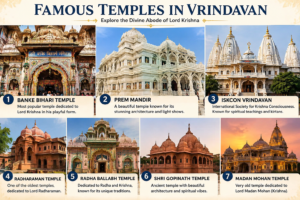
Famous Temples in Vrindavan
The temples in Vrindavan are one of the main attractions of the city. Each temple has its own unique features, be it history, interior, architecture, or rituals.
Banke Bihari Temple
The Banke Bihari Temple is one of the most popular and the most visited temples in Vrindavan. The temple is devoted to a unique manifestation of Krishna called Banke Bihari.
The main feature of this temple is its incredibly rich and unique worship system and the associated massive influx of pilgrims that occurs throughout the year, peaking on Janmashtami and Holi. It is essential to remember that there are specific rules to be followed while visiting the temple.
Prem Mandir
Prem Mandir is considered to be one of the most remarkable modern temples in Vrindavan. It is made of white marble, decorated with stunning carvings, and surrounded by a beautiful landscape. The temple’s architecture is unique, as it combines exquisite fine workmanship, a captivating location, and dramatic lighting, especially at night.
The temple is perfect for taking pictures, but it has specific rules regarding photography. This temple is also called the Radha and Krishna Temple.
ISKCON Vrindavan
ISKCON Vrindavan Temple, also referred to as Krishna-Balaram Mandir, is one of the most iconic international centers of ISKCON (International Society for Krishna Consciousness) in Vrindavan. Devotees to Krishna have gathered at this spiritual temple complex to perform and promote congregational chanting, provide education on Vedic scriptures, and develop a wide range of spiritual practices.
The temple has a unique international flair due to the presence of visitors from other countries. The most notable attraction is the kirtan, devotional music, and dances performed by local devotees, as well as the tranquil atmosphere of the temple courtyard.
Radha Raman Temple
Radha Raman Temple is one of the oldest and most renowned Vaishnavite temples in Vrindavan with a long and storied history. This temple complex is one of the most revered seats of the Gaudiya Vaishnavism tradition and continues to attract scores of devout pilgrims from around the world.
This place is significant for its historical legacy and ancient rituals. In addition, Radha Raman is famous for its unique and comparatively modest interior as compared to other similar temples.
Radha Vallabh Temple
Radha Vallabh Temple is another famous example of a Vaishnavite temple. Radha Vallabh is yet another manifestation of the divine love of Radha and Krishna. The unique feature of this temple is the rich set of rituals and unique culture of devotion that is deeply intertwined with the lifestyle of the locals.
It allows the visitor to get acquainted with the history of the Braj region and get to know the local traditions and customs of the culture of Vaishnavism.
Places to see near Vrindavan
Apart from the large number of beautiful temples, the region around Vrindavan is full of historic, cultural, and religious sites.
The Yamuna Riverfront
The banks of the Yamuna River are sacred to the locals, and many come to pray, attend the aarti ceremony, take a walk or a boat ride. The riverfront is especially beautiful in the early morning and at sunset. In addition, photographs against the background of the Yamuna River will be an unforgettable souvenir. However, it is essential to remember that the Yamuna River is sacred, so it is important to keep it clean and not dispose of any trash in the water.
Mathura and the Keshav Dev Temple
The excursion to Vrindavan is incomplete without a trip to Mathura, a city located only a few dozen kilometers away. Mathura is considered the birthplace of Krishna and is closely linked to him. Consequently, visiting Mathura is an excellent way to immerse yourself in the rich culture and local history of the region.
Govardhan
Govardhan is a small village located near Vrindavan. It is famous for being the place where Krishna lifted Govardhan Hill to shelter the people of Braj from the wrath of Indra, the king of the gods. The highlight of the excursion to Govardhan is the opportunity to participate in the ritual called Govardhan Parikrama. It is essential to remember that walking around Govardhan Hill is a significant event for devotees, and therefore, before planning such a trip, one should think about the associated costs and risks.
Important Things to Remember
Before observing Virdhabon, the devotees may wish to consider the following points:
Double-checking the date according to the local Panchang
The deity to select, if a choice is possible, and the corresponding rituals
The time of the event
Fasting-related recommendations
The presence or absence of the need to recite a specific mantra or vrat katha
Differences between the traditions in the region and country
Most importantly, there is no need to impose one’s family ritual on other families, as there are numerous variations of Hindu rituals, which are all valid and traditional. There are many variations within Hinduism, and there is no single way to observe the holiday.
Conclusion
Virdhabon is a meaningful observance, which may be part of a larger tradition of religious rituals, which underpin cultural, social, and family heritage. Interpreting the cultural context and understanding the value of the ritual are just as important.