Vaishno Devi Temple Pilgrimage
Introduction
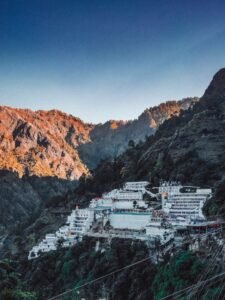
High up among the towering Trikuta Hills in Jammu and Kashmir sits the Vaishno Devi Temple, a deeply honored site for Hindu pilgrims throughout India. Though it draws countless visitors annually – men, women, children – all walking the path with quiet purpose, their eyes set on meeting Mata Vaishno Devi. This climb isn’t only about reaching a shrine; rather, each step becomes part of something deeper, shaped by belief, silence, persistence. The air changes as you go higher, thin yet full of presence, turning movement into meaning.
Pilgrims come here because faith pulls them toward the goddess, yet many stay for the quiet beauty of peaks wrapped in mist. Her presence feels real among those hills – some say she speaks without words, drawing people closer over time. Not just worshippers find their way up the path; others arrive curious about old traditions carved into these mountains. Each step along the trail offers something different – a moment of calm, perhaps, or a view that stops thought altogether. Few leave unchanged after walking where devotion has shaped centuries of footsteps.
The Story Behind Vaishno Devi Temple
Long ago, stories say a woman came into the world to stand for what is right. From legend, she grew up knowing her purpose – shielding people from harm. Instead of chasing ordinary paths, she chose quiet caves and long prayers. Her days turned into years spent sitting still, focused on inner strength.
Some say the tantric sage Bhairon Nath grew obsessed with her spiritual strength, trailing close behind. Fleeing his path, the Goddess wove across the Trikuta Mountains, marking spots now honored by travelers on foot. Inside a hidden cavern, she settled into silence, staying deep in thought nearly a year.
From inside the cave, Mata Vaishno Devi emerged – not as a woman but as Goddess Durga – and struck down Bhairon Nath. His last breath carried regret; he saw clearly what he had done wrong. Pity moved her, so she pardoned him on the spot. High above the main temple sits Bhairon’s shrine – each pilgrim must go there too, because that is how it was decreed.
Some still walk the path now, heading toward the sacred cave along with Bhairon Temple.

Spiritual Meaning of the Temple
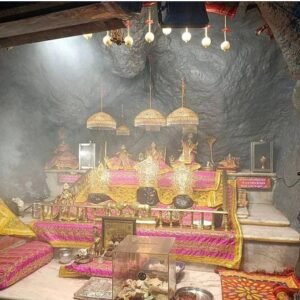
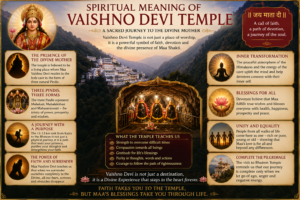
Not like most Hindu shrines with carved figures, at Vaishno Devi it’s different – worship centers on three rock shapes made by nature, called Pindis. These forms did not come from human hands yet they are honored just the same.
These sacred pindis stand as ancient symbols
- Mahakali – The Goddess of Strength and Protection
- Mahalakshmi – The Goddess of Wealth and Prosperity
- Mahasaraswati – The Goddess of Wisdom and Knowledge
Peace, prosperity, courage, stillness within – these gifts follow faithful words spoken at her feet. The trio of sacred figures stands as one force, whole, unbroken, humming beneath every prayer. Not all who come know what they seek. Yet something shifts, quiet and sure.
Some followers feel the goddess herself reaches out to people meant to make the journey. Others say she draws them in without a word being spoken. A quiet pull, they claim, begins long before any decision is made. It starts subtly, like a thought that won’t let go. For many, it’s not about planning – it just happens. The path forms on its own.
The Sacred Journey to Vaishno Devi
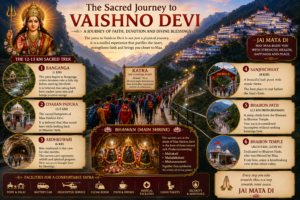
Starting in Katra, that journey kicks off where travelers gather below the temple’s edge. Up ahead lies the Bhawan – roughly thirteen kilometers away – reached on foot by those who come to pay respects.
Walking matters just as much as arriving. Down that smooth path, voices rise again and again with “Jai Mata Di,” threading belief through every step. Faith hums in the air, carried on sound.
Several facilities are available for pilgrims, including:
- Clean resting areas
- Medical centers
- Food stalls
- Drinking water facilities
- Battery cars for selected routes
- Pony and palki services
- Some folks can’t make the hike. For them, a helicopter ride offers another way up. It skips rough terrain. Not everyone walks every path. Machines help when feet fail. Skies open where trails close. Flying replaces walking here
Some travelers head out after dark because the path glows softly and the air turns crisp. Night walkers often find quiet moments under the stars when most have settled down. A slow pace feels natural here, where shadows stretch and light guides each step. Cooler hours wrap around like a deep breath taken slowly.
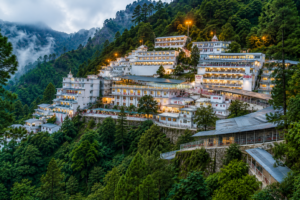
Buildings Among Trees
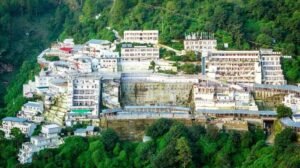
Up in the mountains, the temple sits where new comforts blend quietly with old stillness. Though built high, it holds space for both ease and quiet thought.
High up in the Trikuta range, tucked between thick trees and steep stone walls, rests a sacred cave. Snow drapes the summits during colder months, wrapping the site in quiet wonder. When rains arrive, mist rolls through valleys below. Summer light brings sharp clarity to distant ridges. Each season shifts how the land reveals itself.
Inside the old cave, worship still happens even if newer paths now guide crowds of visitors around it. Though built later, these routes help manage how many come each day.
Hidden among mountains, Vaishno Devi draws people not just with its scenery but through a quiet sense of presence. While many come for the trek, few forget how the air feels different near the shrine. Though stone and river surround it, what stays is less seen than felt. Because stories have shaped this place over time, each step forward seems guided by something older than maps. Where landscape meets devotion, visitors find more than tradition – they notice an unspoken calm that lingers after they leave.
When to Go
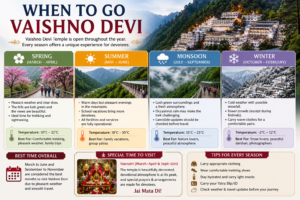
Open all year round, Vaishno Devi Temple welcomes visitors no matter the season. While summer brings steady streams of pilgrims, winter sees fewer crowds but colder paths. Though rain may slow some travelers during monsoon, faith keeps feet moving upward. Even when snow dusts the hills, believers still make the climb without pause. Season after season, the temple stands ready – waiting, watching, never closed.
Clear skies plus mild temperatures make spring a favorite. Autumn brings calm days, often sunny, that many find just right.
When summer comes, crowds arrive – families travel during school breaks. Yet quiet waits in colder months instead, where snow drapes the peaks like a blanket never lifted.
When Navratri arrives, the temple glows with color, alive through song and prayer. Crowds flow in, drawn by faith rather than plan. Light wraps around statues, walls, steps – every surface holds a glow. Worship happens in rhythm, steady like breath, pulled forward by voices together. Not just one kind of chant echoes but many, layered. Each night builds on the last without announcing it. Presence matters more than performance here. Visitors stay longer than they expect.
Visit during any time of year works fine when arranged ahead. That way, moving through the journey goes without hassle.
Nearby Attractions
A visit to Vaishno Devi Temple can be combined with several nearby attractions.
Some say skipping Bhairon Temple leaves the journey half done. Its place matters because old ways insist you must go there.
Pilgrims say she stayed deep inside Ardhkuwari Cave, resting through long quiet days. Nine months passed while the mountain held her presence. This place carries stories of stillness, carved into stone walls. Worshipers visit now, drawn by what happened there so far back.
Some folks might check out:
- Charan Paduka
- Banganga
- Shiv Khori Cave
- Raghunath Temple in Jammu
- Patnitop Hill Station
Each of these places brings quiet meaning along with wide–open views. A sense of depth grows where landscape meets reflection. Not just postcard sights, they shape how you feel as you move through them. The land speaks in subtle ways, stitching moments of calm into motion. What stays is not only what was seen, but how it settled inside.

Helpful Travel Tips
To make your pilgrimage comfortable and memorable:
- Before you start walking, make sure the journey is logged.
- Start with footwear that feels easy on your feet when moving around.
- Packing a jacket makes sense in summer too – mountain air cools fast. Higher ground means chillier conditions, no matter the season.
- Water stays key while you travel. Moving keeps your body needing it more often than usual. Drink at times that feel too early – you’ll thank later timing.
- Pack just what you truly need when heading out. A single bag often holds enough.
- Walk softly through temples, leave nothing behind but quiet steps. A clean space stays welcoming when everyone helps keep it that way.
- Stay updated on weather changes while sticking to approved safety rules.
Packing ahead of time means less stress when it comes to moving through airports. What matters most can stay central if logistics aren’t piling up. Smooth transitions often begin long before departure. Little details sorted early keep attention where it belongs – on what feels meaningful. When gear is ready, thoughts settle too.

Final Thoughts
Pilgrims climb through thin air toward a cave that hums with old stories. High in the Trikuta Mountains, stone paths wind past prayer flags fluttering like whispers. A goddess waits inside rock – her presence felt more than seen. Footsteps mark decades of longing, each one worn into the trail by quiet determination. Devotion here moves slowly, shaped by altitude and breath. The journey matters just as much as the shrine at the top. Believers carry songs, silence, sometimes tears – but always hope.
Deep in the mountains, where prayers rise with the morning mist, lies a place many call home even if they’ve never lived there. Not just stone and scripture, but voices humming through narrow paths – each step forward carried by something deeper than habit. Some come searching for peace, others pulled by family stories whispered at bedtime. The air changes up here, thinner maybe, yet somehow fuller, like it holds every breath ever taken on this trail. What begins as walking soon becomes rhythm, then ritual, then memory. Faces streaked with sweat repeat phrases older than their grandparents, not because they must, but because it feels right. Around each bend, colors flash – flags fluttering, cloth offerings tied tight to iron rails. It isn’t about reaching fast; slowing down seems to be the point. Even silence speaks loud when surrounded by such stillness. Generations pass, seasons shift, yet feet keep coming, drawn not by command but quiet certainty.