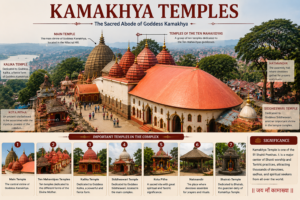
Kamakhya Temple: The Sacred Shakti Peetha of Assam – History, Spiritual Significance, and Travel Guide
Discover the Divine Power of Kamakhya Temple
The Kamakhya Temple is one of the holiest places of pilgrimage for Hindus in India and is located on the lovely Nilachal Hill in Guwahati in Assam. This ancient temple is dedicated to Goddess Kamakhya, a powerful form of Goddess Shakti and it attracts millions of devotees, spiritual seekers and tourists every year.
The Kamakhya Temple, unlike most Hindu temples, celebrates the divine power of fertility, femininity, creation and motherhood. The temple does not have a regular form of the idol of the goddess. Instead, devotees worship a naturally formed stone, which symbolizes the feminine creative energy, making it one of the most unique temples in the world.
If you are seeking spiritual peace, interested in ancient Indian history or planning a pilgrimage in Northeast India, Kamakhya Temple provides an unforgettable experience of devotion, mystery and centuries old traditions.
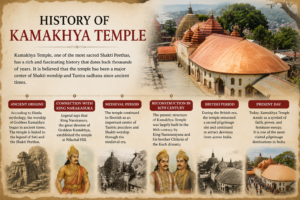
History of Kamakhya Temple
The history of Kamakhya traces back to more than a millennium. Many historians and archaeologists believe that the worship of this deity predates recorded history. According to the legends, the first ever king of Pragjyotishpur, Narakasura, was one of the first rulers to offer his prayers to goddess Kamakhya. The original structure suffered from centuries of war and natural disasters.
The current structure of the temple was built by the Ahom prince Naranarayana and his brother Chilarai in the sixteenth century AD. Since then, Kamakhya has remained one of the significant seats of Shakti. The architectural style of the temple is a harmonious blend of traditional North Indian temples and local Assamese styles. This shrine possesses a unique dome-shaped roof, intricate carvings of deities on stone, and various other sculptures that enhance the beauty of the structure.
 Mythology behind Kamakhya Temple
Most of the origin stories of Kamakhya temple are associated with Goddess Sati and Lord Shiva. According to Hindu mythology, Goddess Sati, wife of Lord Shiva, immolated herself in the fire of King Daksha’s yajna out of anger and dishonor. Lord Shiva, in the form of Tandava, pierced his chest with his own spear, creating 51 Shakti Peethas across the nation. It is believed that the yoni of Goddess Sati fell on the Nilachal Hill, manifesting her divine feminine power. Hence, Lord Shiva built this shrine to honor her contribution to the creation of the universe.
This is why Kamakhya has been regarded as one of the holiest Shakti Peethas since ancient times. The divine powers of this goddess have been worshiped and revered throughout history.
Spiritual Significance of Kamakhya Temple
Kamakhya holds special significance, not only for the people of Assam but across the country. While many temples were created to appease the wrath of gods or to fulfill a wish, Kamakhya is all about seeking the pleasure of the goddess. Devotees seek blessings from the deity for:
- Health and prosperity
- Fertility and children
- Happy married life
- Family welfare
- Spiritual upliftment
- Inner peace and strength
Kamakhya is also one of the most prominent Tantric seats, which is why many saints and sadhus visit the shrine to strengthen their Tantra practice.
Moreover, visiting Kamakhya feels like experiencing a deeply spiritual part of Hindu traditions. Most of the visitors, including sadhus, leave the shrine feeling blissful and closer to the divine feminine force.
The Unique Sanctum in Kamakhya Temple
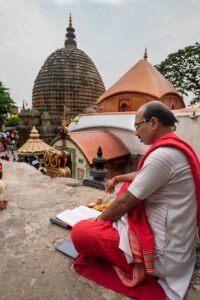
As mentioned above, the deity of Kamakhya is not depicted in human form and is not carved out of wood or stone. There is no idol of goddess inside the sanctum. Instead, there is a narrow staircase leading to a small chamber with a natural fissure on the rock. The continuous stream of water coming out of the fissure is believed to be the source of power that nourishes the entire universe. The ambiance created by the continuous flow of water adds to the mystery and sacredness of this holy place.
The Ambubachi Mela, Kamakhya Temple’s Most Celebrated Festival
The most popular festival of Kamakhya is Ambubachi Mela. This three-day-long event is held every year in June. Legend has it that the goddess menstruates for three days a year, and the temple is closed during this time. The faithful believe that the cloth offered to the deity during this period is pure and helps cure all diseases. Hence, the goddess is worshiped as the giver of life and death. Saints and sadhus from across the country visit the shrine during this period to experience the unique energy of the goddess.

Architecture of Kamakhya Temple
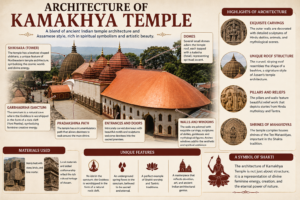
The architectural brilliance of Kamakhya temple has attracted the attention of thousands of art lovers from around the globe. Some of its prominent features include:
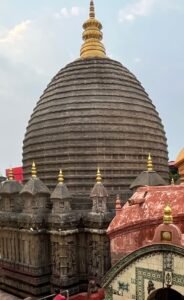
- Beautiful beehive-shaped domes
- Stone-carved images of Hindu deities
- Sculptures of celestial musicians
- A large courtyard with pillars
- Ancient staircases
- Intricate engravings on the toranas
- Small shrines depicting various forms of goddess Shakti
- Moreover, the temple complex also accommodates the shrines of the Ten Mahavidyas, making it a must-visit destination for all Shakti devotees.
When to Visit Kamakhya Temple
You can visit Kamakhya temple any time of the year because it is open throughout the year.
However, the best time to explore this ancient shrine is from October to March when the weather is comparatively cool and comfortable. April and May can also be a good time to visit Kamakhya temple. June is an excellent month for those who wish to witness the spectacular Ambubachi Mela that is held every year in the first week of June.
During the rainy season, Nilachal Hill appears in its greenest form, creating a spectacular view.

How to reach Kamakhya Temple
Reaching Kamakhya temple is not difficult at all because it is one of the most visited shrines in the entire state. If you are planning to visit Kamakhya, here are some of the best ways to reach there:
- By Air – Lokpriya Gopinath Bordoloi International Airport is located around 20 km from Kamakhya temple. You can hire a taxi or even use app-based cab services.
- By Train – Kamakhya railway station is one of the nearest railway stations linked to the city of Guwahati. You can take a train from there to reach the shrine.
- By Road – There are plenty of buses and taxis available in Guwahati to reach Nilachal Hill.
You can also cover all the places in Guwahati on your way to Kamakhya temple. There are various attractions in and around Guwahati that you can explore after visiting Kamakhya temple and return to the city via bus or taxi.
Other Places Near Kamakhya Temple
After visiting Kamakhya, you can explore some of the best places around Guwahati:
- Umananda Temple
- Assam State Museum
- River cruise on Brahmaputra River
- Pobitora Wildlife Sanctuary
- Basistha Ashram
- Srimanta Sankardev Kalakshetra
- Fancy Bazaar
- Guwahati Planetarium
All these places are worth a visit and will give you a unique experience of visiting Assam.

Tips for First-time Visitors
If you are a first-time visitor, here are some tips to help you have a great experience at Kamakhya temple:
- Wear appropriate dress code.
- Take off your slippers before entering the temple.
- Take care to stay hydrated, especially during the hot summer months.
- It is better to reach early in the morning to avoid the crowds.
- Always follow the rules and regulations of the shrine and avoid clicking pictures if it is prohibited.
- Do not litter or leave any garbage at the temple.
If you are in your old age, it will be better to use the transport facility while climbing down/up the Nilachal Hill.
Final Thoughts
Kamakhya is one of the most sought-after destinations among Indian pilgrims. Not only this, but many spiritual seekers, history buffs, and even tourists visit this shrine every year. This article will help you understand the rich history, unparalleled significance, and architectural brilliance of the Kamakhya temple. The enchanting beauty of the Nilachal Hill and the powerful divine feminine energy of goddess Kamakhya will leave you mesmerized.